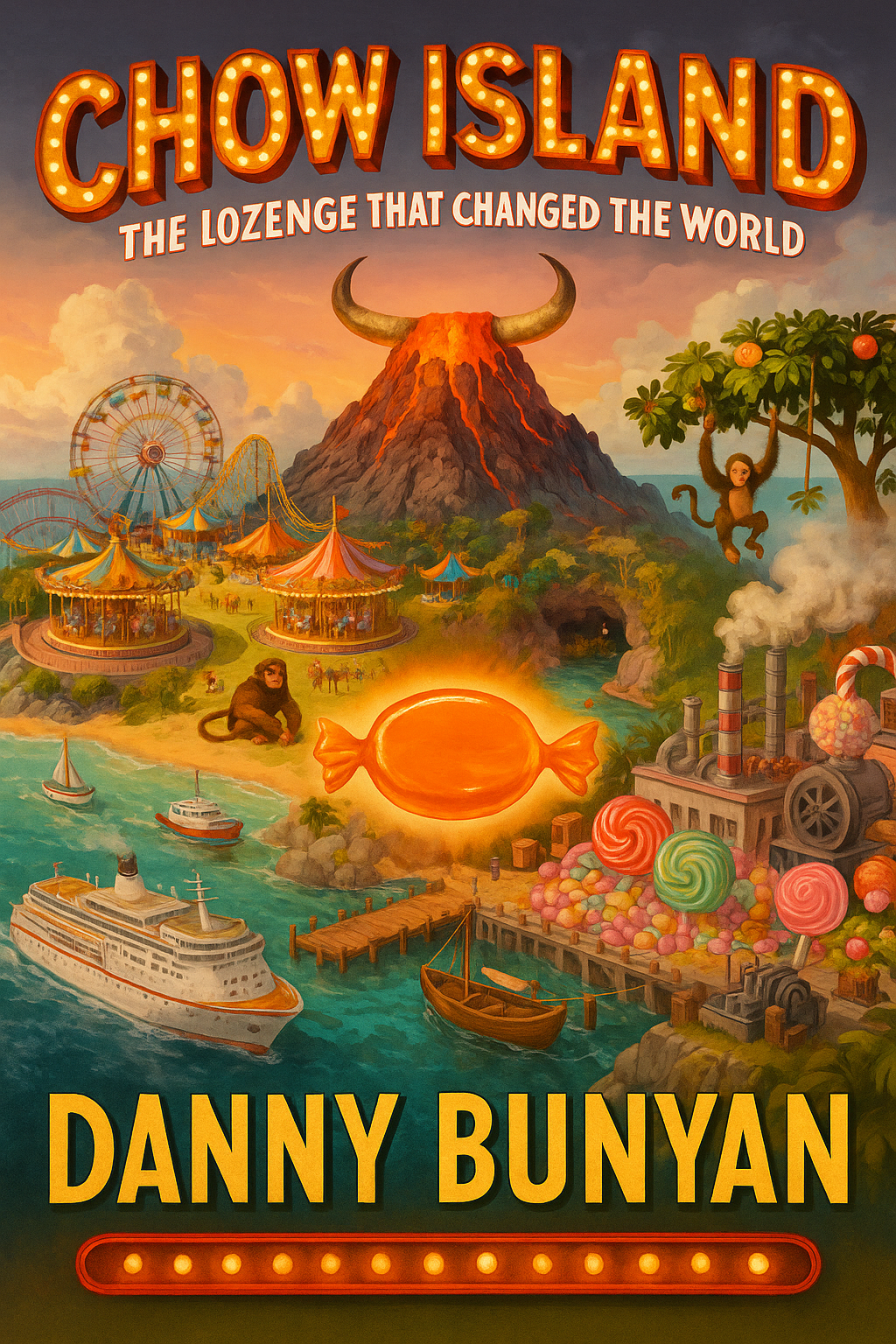
Madame Chow, the world’s largest and most audacious cruise ship, rose from a decade of obsessive engineering and baroque imagination. She was Fincantieri’s crowning folly, a floating metropolis of burnished platinum that glowed against Caribbean sunsets and Scandinavian mist alike. More than a ship, she was a stage for the world’s richest sinners and saints, her twenty decks stacked with 12,000 suites, each one a cocoon of silk, marble, and discreet staff who anticipated desires before they hardened into thought.
Her public spaces outshone most cities. Infinity pools poured into the horizon, glass domes hid midnight pool parties under artificial constellations, and a full replica of Vegas’s Sphere pulsed on the upper deck, wrapping guests in digital oceans, alien skies, and laser-lit concerts. On Deck 9, a neon-lined go‑kart circuit coiled like a serpent, engines screaming as oligarchs and pop idols hurled themselves around tight corners for nothing more than bragging rights and bruised egos. Elsewhere, bowling alleys glowed radioactive blue, whiskey bars held secret poker games, and every corridor was a museum of art and living walls of tropical green.
The passenger list was strictly myth and rumor: royals, crime bosses, startup prodigies, “e‑scooter kings” from Europe’s underbelly, all mingling in gala halls and private karaoke dens where million-euro deals were sealed between verses. Hackathons bled into fashion shows; VR war games pitted government advisors against urban pirates. Champagne never stopped flowing, but beneath the velvet and crystal there was always the sense that every smile hid a calculation.
As Madame Chow left Miami, she blotted out the horizon for smaller ports, drawing flotillas, fireworks, and envy in her wake. Through Caribbean blue and then through fjords cut from ice and stone, she moved like a glittering knife. Orchestras played under the aurora while fortunes changed hands over a single glass of ancient cognac. By the time the ship turned toward the final, secret leg of her journey, the cruise had become less a holiday and more an initiation.
When the ship-wide announcement whispered, “Thirty minutes to arrival,” the mood shifted. Conversations thinned, laughter softened. The engines seemed to lower their voice. On open decks, cigar smoke and perfume tangled with an unexpected aroma drifting in on the breeze ahead: popcorn, caramel, toffee, ham and cheese, the strange, carnival scent of Chow Island reaching out over the waves.
On the horizon, Chow Island appeared at last: a jagged crown of volcanic horns punching up through an orange halo of dying sunlight. Tangerine cirrus clouds feathered the blue sky behind them, turning the whole island into a backlit specter. Every ridge and crevice of the volcanoes was etched in molten gold, ancient and immovable, a reminder that for all Madame Chow’s opulence, true power belonged to the rock and fire beneath.
Closer now, the coastline resolved into something more unsettling. The Pleasure Beach wrapped the shore in a necklace of lights, roller coasters and drop towers poised like chrome skeletons against the dusk, rides twitching to life with test runs that echoed faintly across the water. The scent of fairground food grew stronger, playfull and nostalgic, at odds with the solemn grandeur of the volcanic peaks. It felt like being welcomed and warned at the same time.
Behind the beaches, limousines and Italian water taxis waited in perfect rows along immaculate docks, black paint and polished chrome reflecting lantern light. Inside the island’s restaurants, tables were already laid: silver cutlery aligned with military precision, crystal glasses catching candle flames, waiters in black moving like shadows rehearsing a ritual.
And scattered through it all, barely noticed unless you knew where to look, stood the Lime Cats, silent, motionless guardians in discreet uniforms. They watched from doorways and balconies, from the edges of the marina and the foot of the coasters, their presence more suggestion than threat. Their job was simple: let the dream unfold, and make sure no one saw where it bled into something darker.
Beneath the manicured surface, conveyor belts hummed, generators purred, hidden labs and corridors thrummed in practiced rhythm. Chow Island wasn’t just ready; it was coiled. Every light, every scent, every polished surface was part of a larger design, tuned to capture the hearts and habits of those about to step ashore.
As Madame Chow’s bow aligned with the hidden harbor and the volcanic horns loomed overhead like black spears dipped in gold, a strange hush fell across the decks. Guests felt it without quite knowing why: this was more than arrival at a luxury resort. This was crossing a threshold into a place of whispered riches, buried experiments, and stories that never left the island.
Beneath the champagne toasts and nervous jokes, a single thought threaded through the crowd, Chow Island was beautiful, yes, but beauty here felt like bait. And as the ship glided the last few meters toward the dock, the island waited, smiling with carnival lights and volcanic teeth, ready to write its next chapter in the lives of everyone daring enough to disembark.